Glutathione
Injection or nasal spray. As your physician directs.
From $129/moAntioxidant support for your cells.
Compounded medication, not FDA approved
Compounded medication, not FDA approved
For redness, flushing and bumps that keep coming back. 3 prescription ingredients in 1 cream, each with its own way of calming rosacea-prone skin.
$149 a month
Cream. As your physician directs.
A topical formula combining azelaic acid, ivermectin and metronidazole for persistent redness, flushing and rosacea-prone skin.
Selected: 2 months. 2-month package $248.
No appointment needed. Complete the intake online. A licensed physician reviews it and calls only if needed.
Opens the secure patient portal. No health questions are asked on this website.
Rosacea is a long-term skin condition that shows up on the face as redness, flushing and pimple-like bumps. About 1 in 18 adults has it. Skin with rosacea is easily set off: sun, alcohol, spicy food and hot drinks all bring on a flare. And it carries far more Demodex, the tiny mites that live on everyone's face.
Rosacea has more than 1 cause, so this cream comes at it 3 ways. A review of 106 trials in 13,631 people rated the evidence for azelaic acid and for ivermectin as high quality, and the evidence for metronidazole as moderate.
Medications are sourced directly from US-based, state-licensed pharmacies to ensure the highest standards of safety, consistency, and quality in compounded formulations.
For use on the skin only, so keep it out of the eyes and mouth.
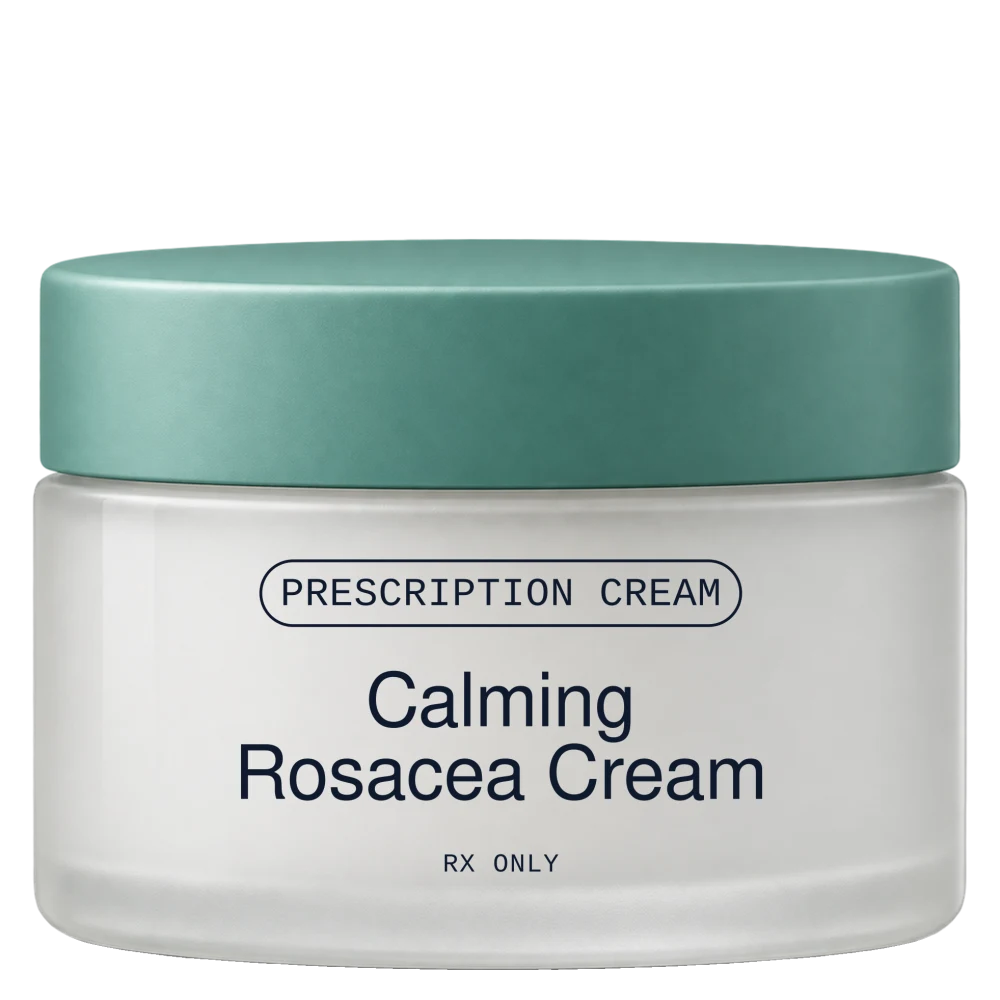
Pictures are illustrations, except brand-name medications, which are pictured in the manufacturer's own packaging. Peak Protocol Rx does not compound or dispense medication. If a physician prescribes any other treatment, it comes from a licensed pharmacy in that pharmacy's own packaging and labeling, and it will not look like its picture.
Rosacea is a long-term skin condition that shows up on the face as redness, flushing and pimple-like bumps. About 1 in 18 adults has it. Skin with rosacea is easily set off: sun, alcohol, spicy food and hot drinks all bring on a flare. And it carries far more Demodex, the tiny mites that live on everyone's face.
Calming Rosacea Cream puts 3 prescription ingredients in 1 cream. Azelaic acid brings down swelling and redness. Metronidazole is an antimicrobial prescribed for rosacea. Ivermectin is an anti-parasite medicine prescribed for the bumps. In a review of 106 rosacea trials, each of the 3 beat a plain cream on its own.
Skin with rosacea carries about 15 times more Demodex mites than skin without it. These tiny mites live on everyone's face.1
Tap a group.
Results vary. Clinical trial results apply only to the FDA-approved branded medication specifically identified and do not apply to compounded medications. All medications must be prescribed by a licensed provider based on medical necessity.

Rosacea has more than 1 cause, so this cream comes at it 3 ways. A review of 106 trials in 13,631 people rated the evidence for azelaic acid and for ivermectin as high quality, and the evidence for metronidazole as moderate.
In a review of 106 rosacea trials, ivermectin cream beat a plain cream for bumps and pimples, with high-quality evidence.2
Azelaic acid brings down the swelling and redness of rosacea. The same review rated its evidence as high quality.4
Metronidazole is an antimicrobial prescribed for rosacea. In pooled trials, about twice as many people improved as with a plain cream.2
3 ingredients, 3 jobs: 1 for swelling and redness, 1 antimicrobial and 1 for the bumps. You apply 1 cream, not 3.
Across the rosacea trials in the review, side effects were mostly mild and short-lived.2
A thin layer on clean, dry skin. Moisturizer, sunscreen and makeup go on once the cream has dried.5
The graphics are illustrations, not measured results. Results vary. Clinical trial results apply only to the FDA-approved branded medication specifically identified and do not apply to compounded medications. All medications must be prescribed by a licensed provider based on medical necessity.
Wash gently, let your skin dry, then apply a thin layer. Mild stinging or tingling at first is common and usually settles. Start a daily sunscreen now: sun is 1 of the most common causes of a flare.
Rosacea medicines work gradually. Bumps and pimples are what people look for first as their skin starts to calm.
This is when most rosacea trials measured their results: after 2 to 3 months of steady use. Look for fewer bumps and a calmer face.
Rosacea is long-term and comes in waves. Your physician reviews how your skin is doing and adjusts your plan. Knowing your own triggers keeps flares down.
Everyone responds differently. A licensed physician sets the plan and reviews how it is going.
Medications are sourced directly from US-based, state-licensed pharmacies to ensure the highest standards of safety, consistency, and quality in compounded formulations.
Peak Protocol Rx does not make or compound any medication. Independent licensed pharmacies fill every prescription.
Every prescription is prepared and dispensed by a state-licensed pharmacy in the United States.
A compounded medication is made for 1 patient's prescription, after a licensed physician prescribes it.
All compounding meets the requirements of the state board of pharmacy and comes with a valid Certificate of Analysis.
Every batch is tested by an independent laboratory before it is dispensed.
Still have questions? Interested in more than 1 treatment? Schedule a free Care Team consultation

You see the price before you pay.
Choose your treatment and answer the health questions in the secure patient portal. You see the price before you pay.

Your information is reviewed. No appointment is needed for this step.
An independent physician licensed in your state reviews your answers and calls only if needed. If treatment is not appropriate, you are told.

A licensed U.S. pharmacy prepares your medication and ships it with tracking. Delivery usually takes 4 to 5 business days. Allow up to 7 to 10.

How is everything going? Message us any time.
Refill scheduledA general comparison with the published terms of large telehealth brands and with typical primary care practices, November 2026. Individual companies and practices differ.

Free consultation. A reply in under 24 hours.
Real people, with you at every step.
A Care Team member can call you, free, to answer questions about options, pricing and how the process works. The Care Team does not make medical decisions. A licensed physician does.
A prescription cream with 3 ingredients: azelaic acid, metronidazole and ivermectin. It is prescribed for the redness, flushing and bumps of rosacea-prone skin.
A long-term skin condition of the face. It shows up as redness, flushing and pimple-like bumps, and it comes and goes in flares. About 1 in 18 adults has it, most often between the ages of 45 and 60.
Azelaic acid brings down swelling and redness. Metronidazole is an antimicrobial prescribed for rosacea. Ivermectin is an anti-parasite medicine prescribed for the bumps.
Tiny mites called Demodex live on everyone's face. In a study of 94 adults, skin with rosacea carried about 15 times more of them, and skin with rosacea bumps carried the most. Ivermectin is an anti-parasite medicine, although exactly how it works in rosacea is not known.
Wash your face gently and let it dry. Spread a thin layer on the affected skin, as your physician directs. Keep it away from your eyes, lips and mouth. Moisturizer, sunscreen and makeup go on after the cream has dried. The pharmacy label gives the exact directions.
Rosacea medicines work gradually. Most trials of these ingredients ran 2 to 3 months, so give the cream that long before you judge it.
These ingredients have been studied mostly for the bumps and pimples of rosacea. Flushing differs from person to person, and it follows your triggers. Avoiding the things that set you off is part of the plan.
Common triggers are sun, alcohol, spicy food and hot drinks such as coffee and tea. Yours are your own. Notice what comes before a flare, and tell your physician.
Keep it gentle: a mild cleanser, a moisturizer, and a broad-spectrum sunscreen of SPF 30 or higher every day. A fragrance-free mineral sunscreen is the kindest choice. Skip scrubs, astringents, peels and products with alcohol, menthol, camphor or fragrance.
Tell your physician if you are pregnant, planning a pregnancy or breastfeeding. Also say if you have asthma, cold sores that keep coming back, a blood disease, or a condition of the brain, spinal cord or nerves.
Apply it when you remember. If it is almost time for the next application, skip the missed dose. Do not apply extra to make up for it.
Rosacea is a long-term condition, and symptoms often return. Talk with your physician before you stop, so you have a plan for keeping your skin calm.
Yes. A licensed physician reviews your health history, your skin and your goals and decides whether Calming Rosacea Cream is right for you. No appointment is needed: you complete the intake online, and the physician calls only if needed.
These work well together. A licensed physician decides what is right for you.
Injection or nasal spray. As your physician directs.
From $129/moAntioxidant support for your cells.
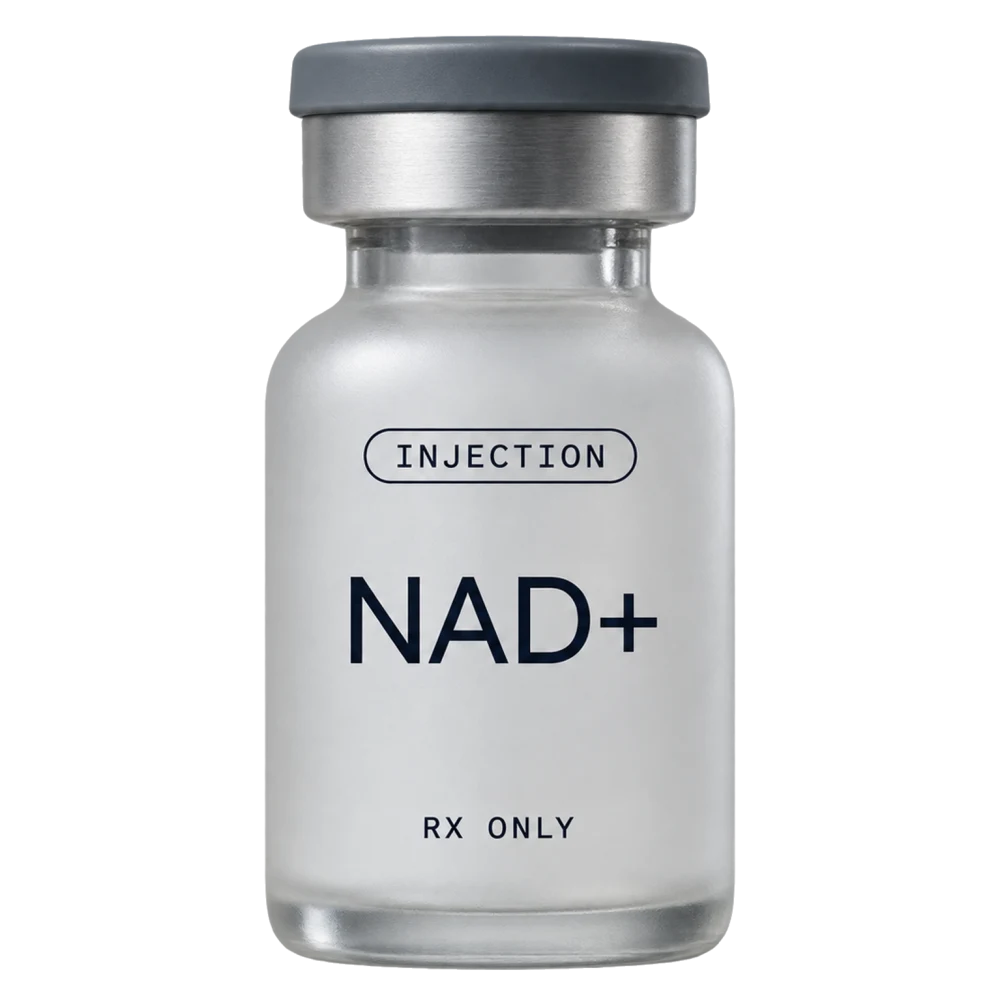
Injection or nasal spray. As your physician directs.
From $199/moA popular add for energy and healthy aging.
Blood draw at a lab near you. One time.
$229A broad health snapshot from 1 blood draw.
Pictures are illustrations, except brand-name medications, which are pictured in the manufacturer's own packaging. Peak Protocol Rx does not compound or dispense medication. If a physician prescribes any other treatment, it comes from a licensed pharmacy in that pharmacy's own packaging and labeling, and it will not look like its picture.
Compounded medications are not FDA-approved. The FDA does not review compounded medications for safety, effectiveness, or quality.
Read this before you start. A licensed physician reviews your health history and decides whether treatment is appropriate.
A licensed physician decides whether treatment is appropriate.
For use on the skin only, so keep it out of the eyes and mouth.
This is not a complete list. Read the information that comes with your medication, and ask the pharmacist or the physician about anything that concerns you.
This cream is for use on the skin only. It contains azelaic acid, metronidazole and ivermectin. Share your full health history, every medicine you take and every skin product you use with your physician, who decides whether it is right for you.
These are usually mild. Tell your physician if any of them is severe or does not go away.
The 3 ingredients have each been studied on their own, not together in this cream. Avoid cleansers with alcohol, scrubs, astringents and peeling products while you use it.
These sources are for general education. They do not replace advice from a licensed physician.
About compounded medications. A compounded medication is prepared by a licensed pharmacy for 1 patient, from that patient's prescription. Compounded medications are not FDA-approved. The FDA does not review compounded medications for safety, effectiveness, or quality. A compounded medication is not a generic version of any brand-name drug. Peak Protocol Rx does not make or compound any medication: independent licensed pharmacies fill every prescription. A licensed physician decides whether a compounded medication or an FDA-approved medication is appropriate for you.
A prescription is required. A prescription is issued only if a licensed physician determines that treatment is appropriate for you.
A listing here is not a recommendation. A licensed physician evaluates you and decides whether any treatment is appropriate. Availability varies by state.
Individual results vary. No outcome is guaranteed.
All medical decisions are made solely by licensed healthcare professionals. Medications are prescribed only when medically necessary. GLP-1 medications are not suitable for everyone. Results may vary.
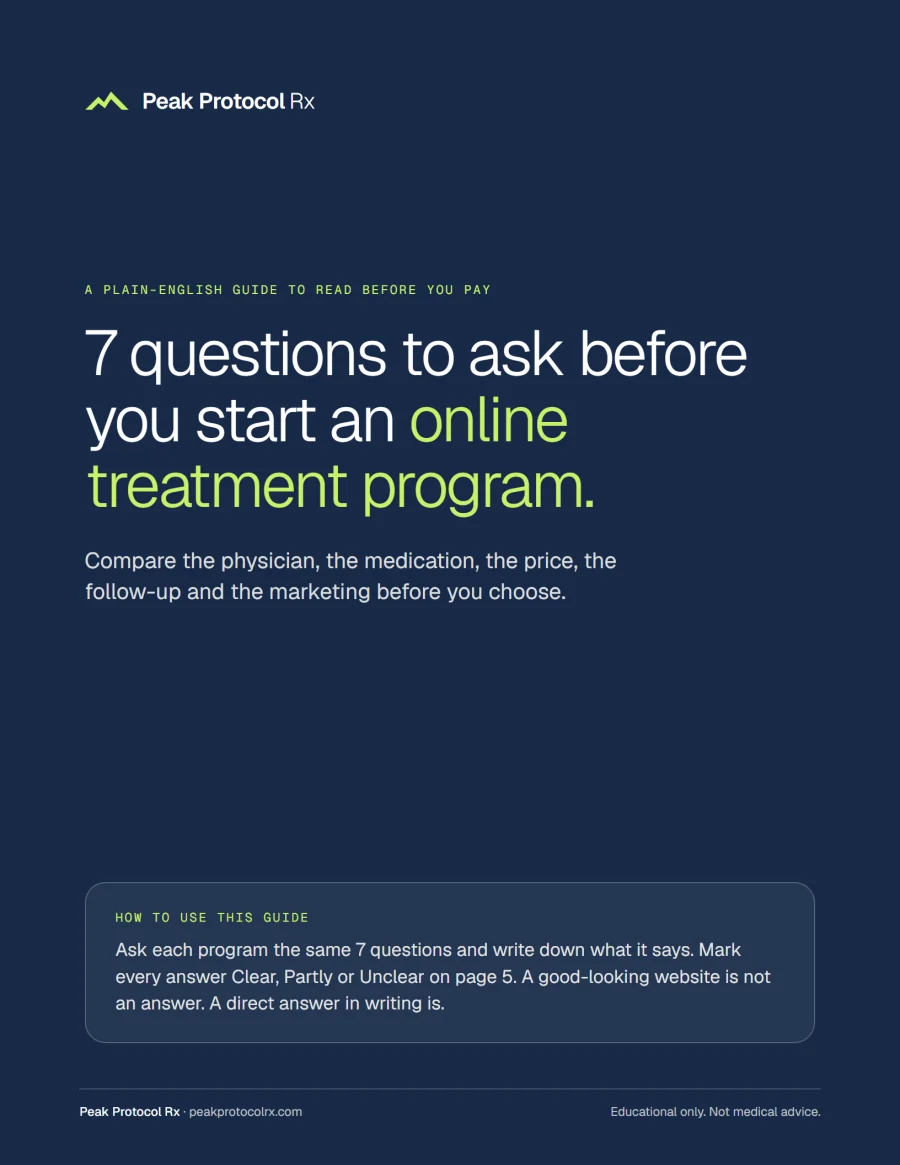 6 pages. No health questions.
A free checklist for comparing programs before you pay. It opens here as soon as you sign up.