Hormone optimization for women: what is it, and how does it differ from HRT?
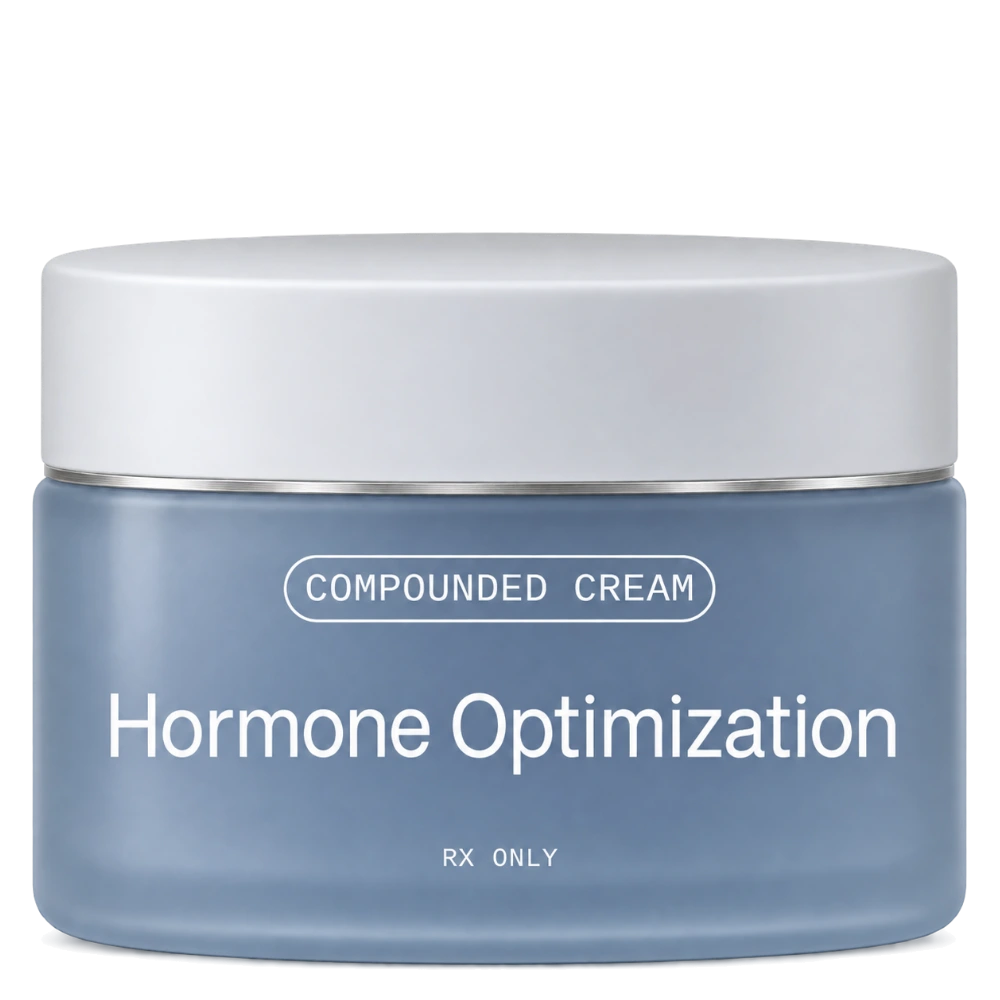
Hormone optimization puts back the hormones that fall in perimenopause and menopause, in amounts set for you. HRT, short for hormone replacement therapy, is the name many people use for taking prescription hormones at that stage of life. The difference here is how the plan is built: your formulation is made for you alone, from your own lab results, by a compounding pharmacist and a licensed physician.
What it costs
| Treatment | How it is taken | Status | Price |
|---|---|---|---|
| Hormone Optimization for Women | Custom-made for you: cream, patch, injection, vaginal suppository or pill. | Compounded medication, not FDA approved | $499 first month, then $149 a month |
Questions and answers
What is hormone optimization?
Putting back the hormones that fall in perimenopause and menopause, in amounts set for you. Your plan can include estrogen, progesterone, testosterone and DHEA.
How does hormone optimization differ from HRT?
HRT is short for hormone replacement therapy, the name many people use for taking prescription hormones in perimenopause and menopause. Hormone optimization uses the same kinds of hormones. The difference is how your plan is built: your formulation is made for you alone, from your own lab results, by a compounding pharmacist and a licensed physician.
Why is it called optimization?
Because the goal is not to hand every woman the same dose. It is to find the levels where you feel and function at your best, starting from your own lab results.
How is my formulation decided?
A compounding pharmacist who specializes in women's hormone optimization reviews your lab results and your health history and develops a formulation. Your licensed physician examines you, goes over it with you and makes the final decision.
What forms does it come in?
Creams, patches, injections, vaginal suppositories and pills. Tell your physician what you prefer. Your physician and your pharmacist choose what suits your body and your plan.
Why does it take longer than other treatments?
Because nothing is pre-made. Your labs come first, and results usually take 6 to 8 days. A pharmacist reviews them in 1 to 2 days, your physician examines you, and then the pharmacy makes your treatment to order. Plan on about 2 to 3 weeks from your blood draw to your door.
Do I need lab work?
Yes. A baseline lab panel is included in your first month. It is what your formulation is built on.
Do I need progesterone?
If you still have your uterus and take estrogen, yes. Progesterone protects the lining of the uterus. Your physician decides.
Will my plan change over time?
Yes. Your body changes, so your formulation can too. You have a check-in with a licensed physician at 6 months, and your dose and your form can be adjusted whenever you need it.
Is it right for me?
Hormone optimization is for women in perimenopause or menopause. A licensed physician reviews your health history and your labs and decides whether it is appropriate for you.
Compounded medications are not FDA-approved. The FDA does not review compounded medications for safety, effectiveness, or quality.
Hormone Optimization for Women: price, steps and full safety information →
A listing here is not a recommendation. A licensed physician evaluates you and decides whether any treatment is appropriate. Availability varies by state.
Sources
- Avis NE, et al. Duration of menopausal vasomotor symptoms over the menopause transition (Study of Women's Health Across the Nation; 1,449 women with frequent hot flashes or night sweats; median 7.4 years). JAMA Internal Medicine, 2015.
- Zumoff B, et al. Twenty-four-hour mean plasma testosterone concentration declines with age in normal premenopausal women (33 healthy women aged 21 to 51; DHEA falls steeply too; the figures at 30 and 50 are our arithmetic from the study's equation). Journal of Clinical Endocrinology and Metabolism, 1995.
- The 2022 hormone therapy position statement of The North American Menopause Society (the evidence it reviews comes from studies of standard hormone products). Menopause, 2022.
- Davis SR, Baber RJ. Treating menopause: MHT and beyond (review). Nature Reviews Endocrinology, 2022.
- Davis SR, et al. Global consensus position statement on the use of testosterone therapy for women. Journal of Clinical Endocrinology and Metabolism, 2019.
These sources are for general education. They do not replace advice from a licensed physician.
This page is educational. It is not medical advice. .
More to read
- 7 questions to ask before you start an online treatment program
- How are lab results used?
- Testosterone therapy (TRT) online: how does it work?
- Which peptides can a physician prescribe here, and how is each one taken?
- Compounded semaglutide and compounded tirzepatide: how do they differ?
- Brand-name and compounded GLP-1 medications: what is the difference?
- What is GLP-1 "microdosing", and what is a maintenance dose?
- What do online hormone, peptide and weight programs cost here?
- Where are peptides available?