





 Illustrative photo.
Consultation
Lab & diagnostic results review
$89
Want a licensed physician to review your results and give you a one-on-one consultation? Book a free Care Team consultation. The Care Team adds your test and the review to 1 order.
Prescription device
See your own glucose, day and night. 1 sensor on your arm shows how your meals, your exercise and your sleep move your blood sugar, for up to 14 days.
$198
Wearable sensor. 1 sensor per order.
One 14-day sensor, bought once rather than monthly. A good way to see your own data before committing to a program.
$198
1 sensor, bought once.
Order online, no appointment.
Opens the secure patient portal. No health questions are asked on this website.
Want a licensed physician to go over your readings with you? Book a free Care Team consultation, and the Care Team adds the sensor and the review to 1 order.
Prescribed only when medically appropriate. A continuous glucose monitor does not diagnose diabetes.
About results. Your glucose readings are not reviewed by a licensed physician. They are for your own information and are not a diagnosis. Share them with your own doctor.
A continuous glucose monitor (CGM) is a prescription wearable device that estimates your glucose (sugar) level every few minutes, day and night. This order is for 1 sensor, worn on the arm for up to 14 days. You buy it once, not monthly.
A single blood test gives you 1 number. A sensor gives you up to 14 days of them. You see how your own glucose responds to what you eat, how you move and how you sleep: your own data, before you commit to a program.
Prescribed only when medically appropriate. A continuous glucose monitor does not diagnose diabetes.
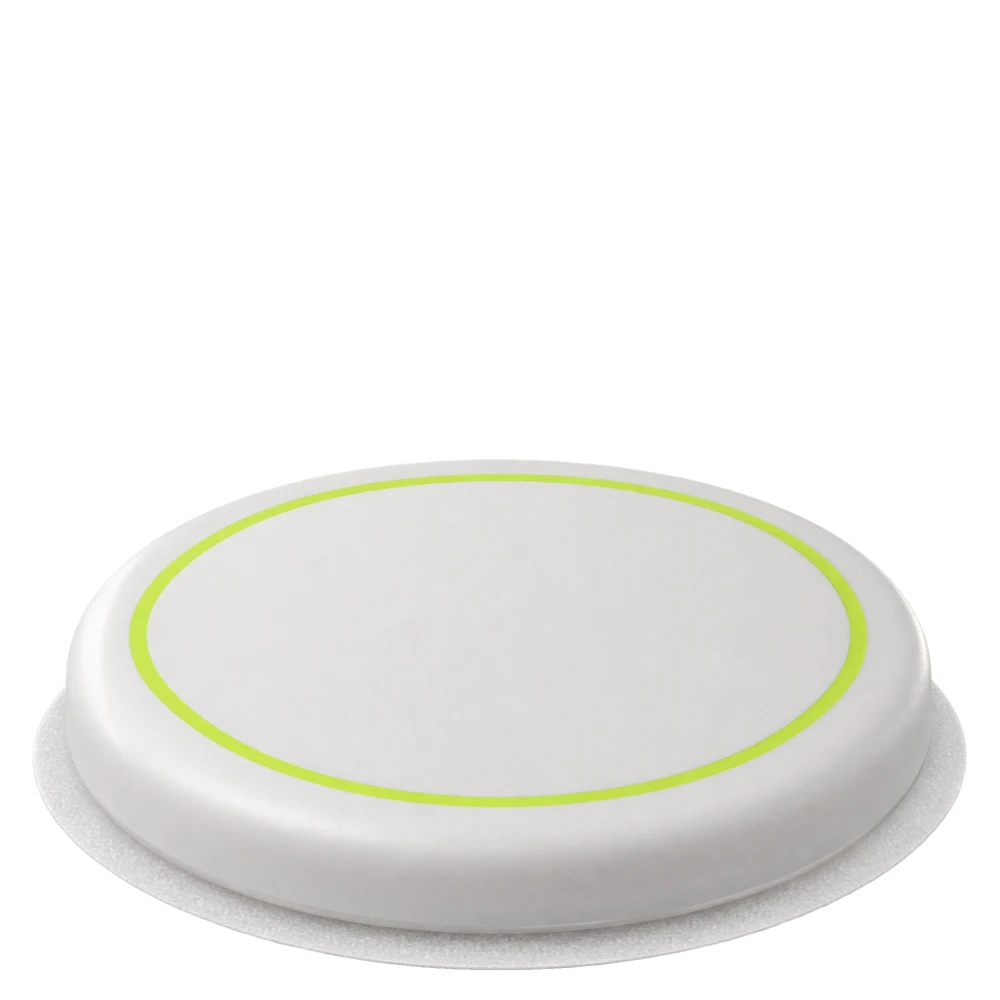
Illustration only. The sensor you receive is the manufacturer's own and will not look like this picture.
A continuous glucose monitor (CGM) is a prescription wearable device that estimates your glucose (sugar) level every few minutes, day and night. This order is for 1 sensor, worn on the arm for up to 14 days. You buy it once, not monthly.
A tiny sensor sits just under your skin, held in place by an adhesive patch. It measures glucose in the fluid between your cells, which is very close to the level in your blood, and sends the readings to a smartphone app or a reader. Seeing your level next to your meals, exercise and sleep shows how your own glucose responds to them.
A single blood test gives you 1 number. A sensor gives you up to 14 days of them. You see how your own glucose responds to what you eat, how you move and how you sleep: your own data, before you commit to a program.
See your glucose level next to each meal and learn how your own body responds to your food choices.
See your level next to your workouts and your nights, and how your own glucose responds to them.
The sensor estimates your glucose every few minutes, around the clock.1
1 sensor, worn on the arm for up to 14 days. Bought once, not monthly.
Readings go wirelessly to a smartphone app or a reader, automatically or when you scan the sensor, depending on the model.1
Told your blood sugar is borderline? Day-to-day detail gives you something concrete to discuss with your own doctor.
The graphics are illustrations, not measured results. Individual results vary.
Order in the secure patient portal. You see the price before you pay.
This is a prescription device. A licensed physician reviews your order online and decides whether it is appropriate for you.
If prescribed, the sensor is shipped to your home. Put it on your arm by following the device instructions.
Watch your level next to your meals, exercise and sleep. The readings are for your own information. Share them with your own doctor if you have questions about what they mean.
A test does not diagnose a condition. Share your report with your own doctor.
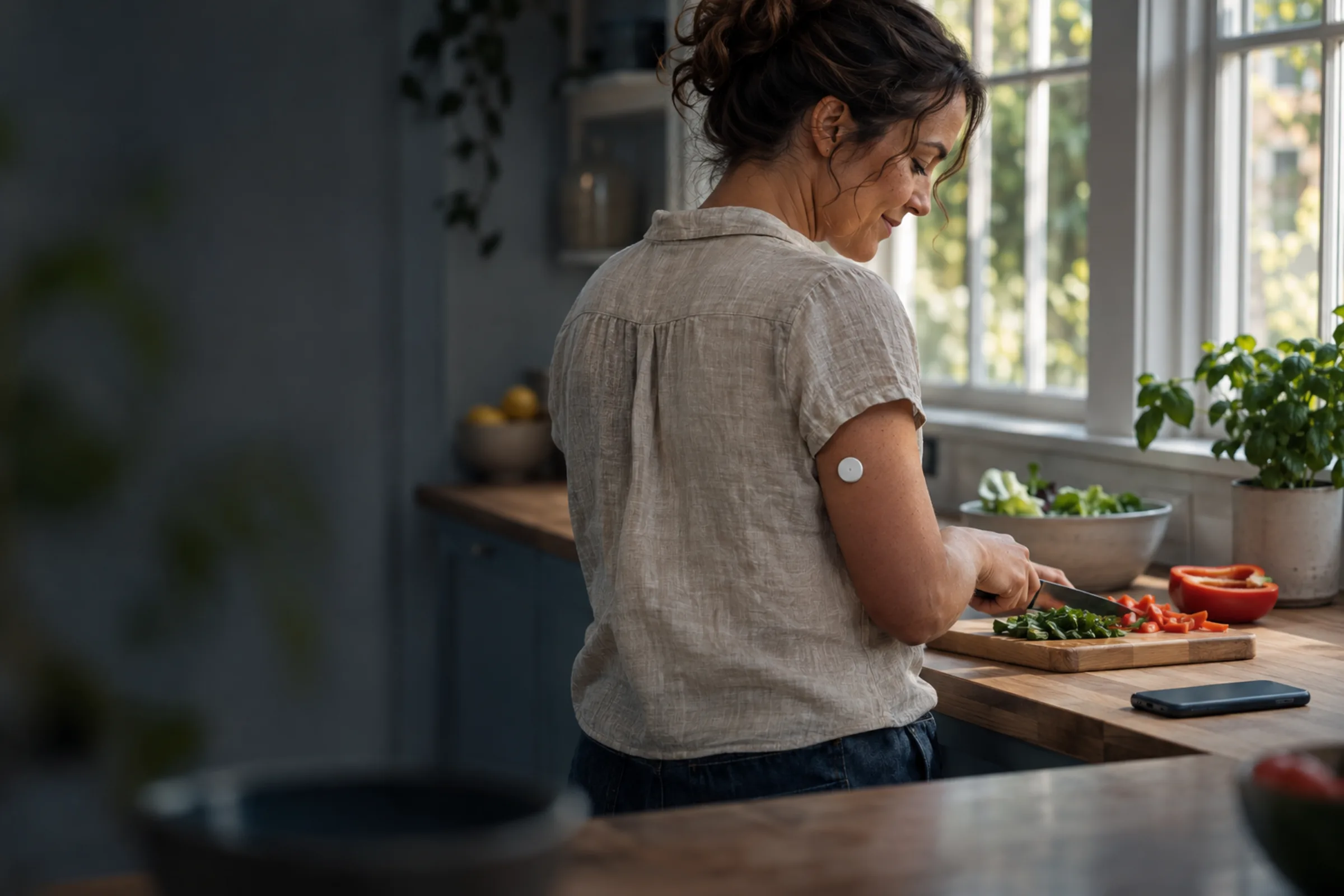
Illustrative photo.$89
Want a licensed physician to review your results and give you a one-on-one consultation? Book a free Care Team consultation. The Care Team adds your test and the review to 1 order.
A prescription wearable device that estimates your glucose (sugar) level every few minutes, day and night. A tiny sensor sits just under the skin and sends readings to a smartphone app or a reader.
1 sensor, worn on the arm for up to 14 days. It is bought once, not monthly.
Yes. This is a prescription device. A licensed physician reviews your order online and decides whether it is appropriate. The physician reviews the order, not your glucose readings.
Adults who want to see how meals, exercise and sleep affect their own glucose before starting a program. People who have been told their blood sugar is borderline and want day-to-day detail to discuss with their own doctor. Adults starting a weight management plan who want feedback on their food choices.
On the arm. A small sensor sits just under the skin, and an adhesive patch holds it in place for up to 14 days. Follow the device instructions for putting it on and taking it off.
On a smartphone app or a reader. The sensor sends readings wirelessly, either automatically or when you scan the sensor, depending on the model.
No. A continuous glucose monitor does not diagnose diabetes. If your readings concern you, share them with your own doctor, who can order the blood tests used for diagnosis.
The sensor measures glucose in the fluid under the skin, not in blood, so it runs behind when levels change quickly. Certain medicines and supplements also affect a sensor.
Tell the physician if you have diabetes, use insulin or take any other medicine that lowers blood sugar. The physician decides whether the device is appropriate for you. Do not change the dose of a prescribed medicine because of a sensor reading without asking your own doctor.
No. The readings are for your own information. Share them with your own doctor if you have questions about what they mean.
Tests and treatments people often look at together.
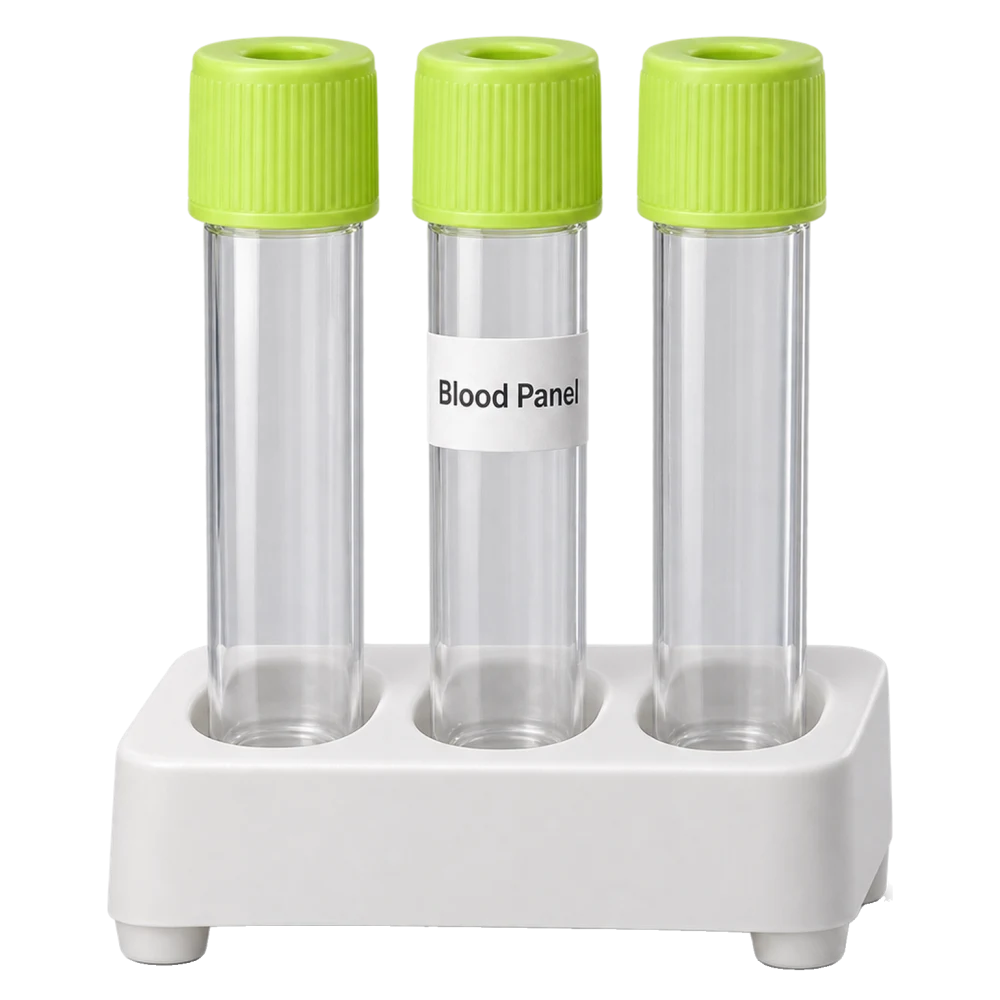
Blood draw at a lab near you. One time.
$229Adds hemoglobin A1c and insulin from 1 blood draw to your sensor readings.
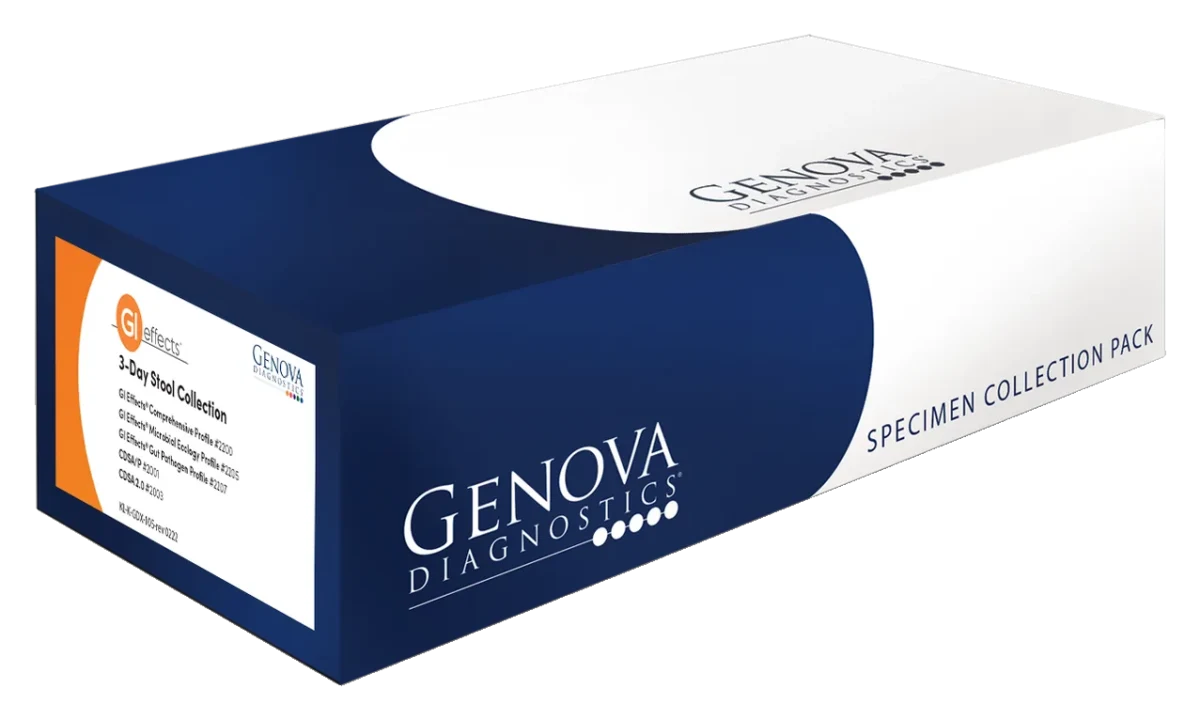
At-home collection kit. One time.
$699A second view of food and your body: how well you digest and absorb it.
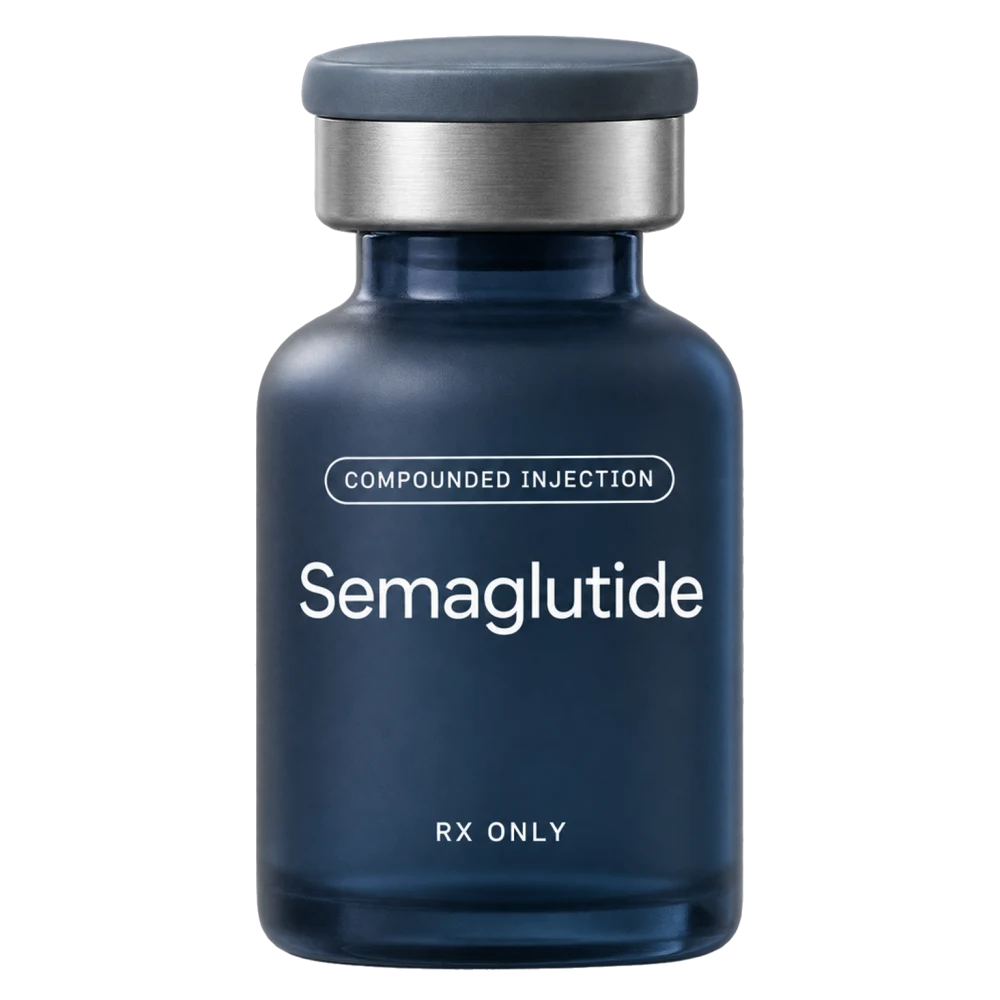
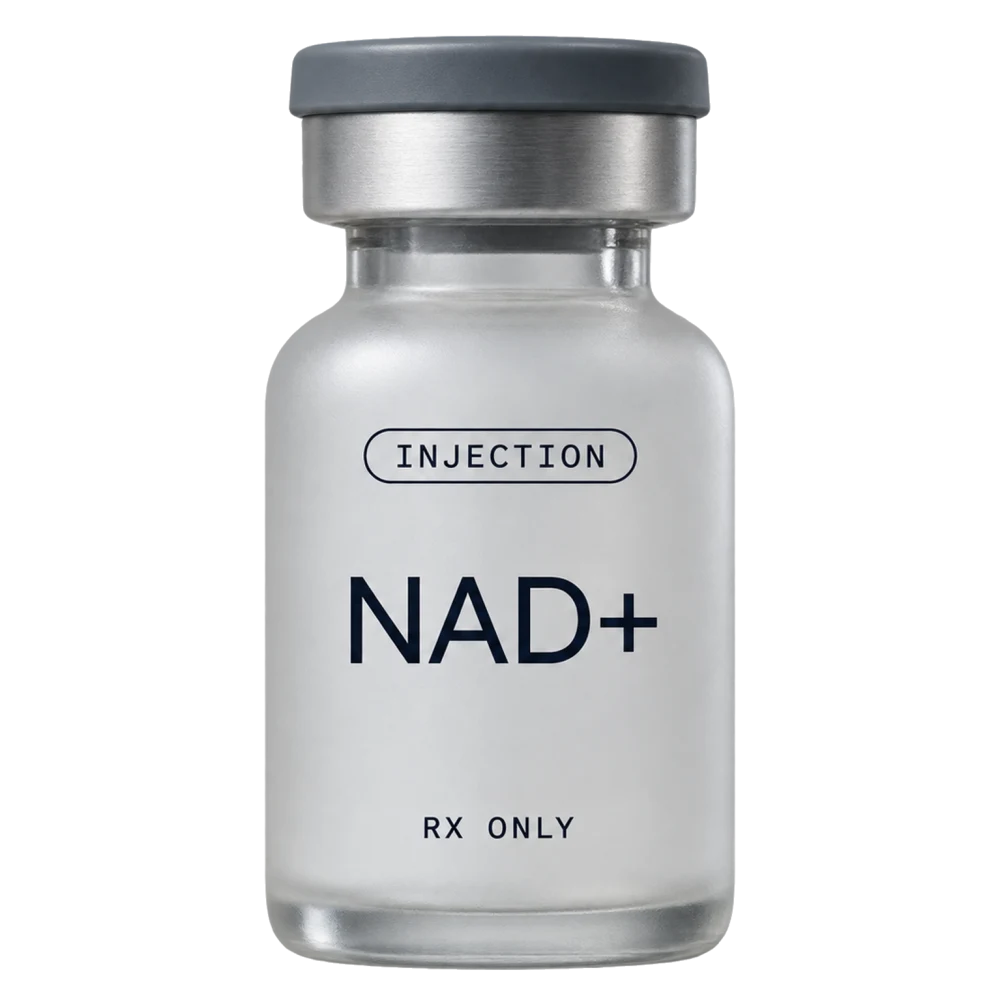
Injection under the skin. Once a week.
From $269/moStarting a weight management plan? See how your food choices show up in your readings.
Pictures are illustrations, except brand-name medications, which are pictured in the manufacturer's own packaging. Peak Protocol Rx does not compound or dispense medication. If a physician prescribes any other treatment, it comes from a licensed pharmacy in that pharmacy's own packaging and labeling, and it will not look like its picture.
Compounded medications are not FDA-approved. The FDA does not review compounded medications for safety, effectiveness, or quality.
A test does not diagnose a condition. Share your report with your own doctor.
A test does not diagnose a condition. Share your report with your own doctor.
Prescribed only when medically appropriate. A continuous glucose monitor does not diagnose diabetes.
A continuous glucose monitor is a prescription device. A licensed physician reviews your order and prescribes it only when medically appropriate. Nobody reviews your readings: they are for your own information.
Prescribed only when medically appropriate. A continuous glucose monitor does not diagnose diabetes.
These sources are for general education. They do not replace advice from a licensed physician.
A listing here is not a recommendation. A licensed physician evaluates you and decides whether any treatment is appropriate. Availability varies by state.
Individual results vary. No outcome is guaranteed.
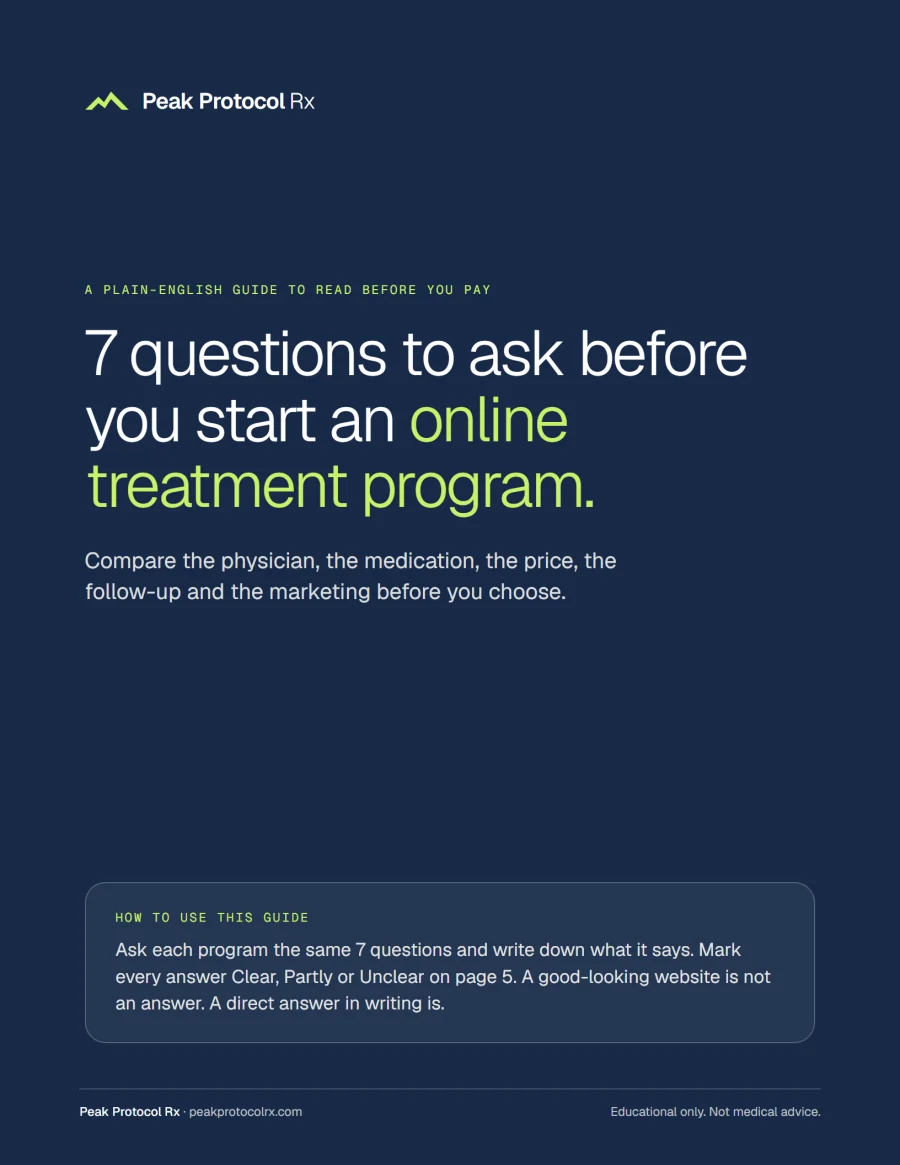 6 pages. No health questions.
A free checklist for comparing programs before you pay. It opens here as soon as you sign up.